

TL;DR
DDX San Diego marked a turning point in the UX industry’s relationship with AI. Designers moved from fear to fluency, from app-thinking to agent-thinking, and from artifact design to system stewardship.
UX is evolving into the middleware of hybrid societies; the mediator between humans, machines, and the norms that allow them to coexist. This deep dive unpacks the philosophical, organizational, and technological shifts revealed at the conference, and offers a cyborg-theory interpretation of where the field is heading.
What is DDX?
DDX positions itself as a global think-tank at the intersection of UX, innovation, new ventures, and digital leadership. In practice, it functions as a distributed research node: design executives, product strategists, futurists, researchers, and founders convene to interpret shifting technological conditions and exchange field intelligence.
BOOT / DEEP MODE
Not just a design conference, DDX San Diego was a pressure test. It was measuring the next direction of UX, and how designers are metabolizing the AI epoch. If DDX NYC illuminated the scaffolding we needed to build, San Diego turned its attention to the operating system itself.
1. Sebastian Gier —
Privilege, Participation, and Distributed Futures
Sebastian’s opening wasn’t just a tone-setter but an ideological stake.
Most conferences begin with logistics; this one began with ethics.
“Design is a privilege.” — Robert Fabricant (via Gier)
It’s not just a motivational quote. It’s an observation of a system. Design privileges certain vantage points. Certain geographies. Certain bodies. Certain power positions.
Then he layered in the geopolitical shape of innovation:
10% of countries account for 80% of global R&D.
What makes this profound is not the inequality but what it implies about the shape of future systems. If design materializes futures, then the future has been — and still is — designed by a handful of nations.
Gier’s reframing:
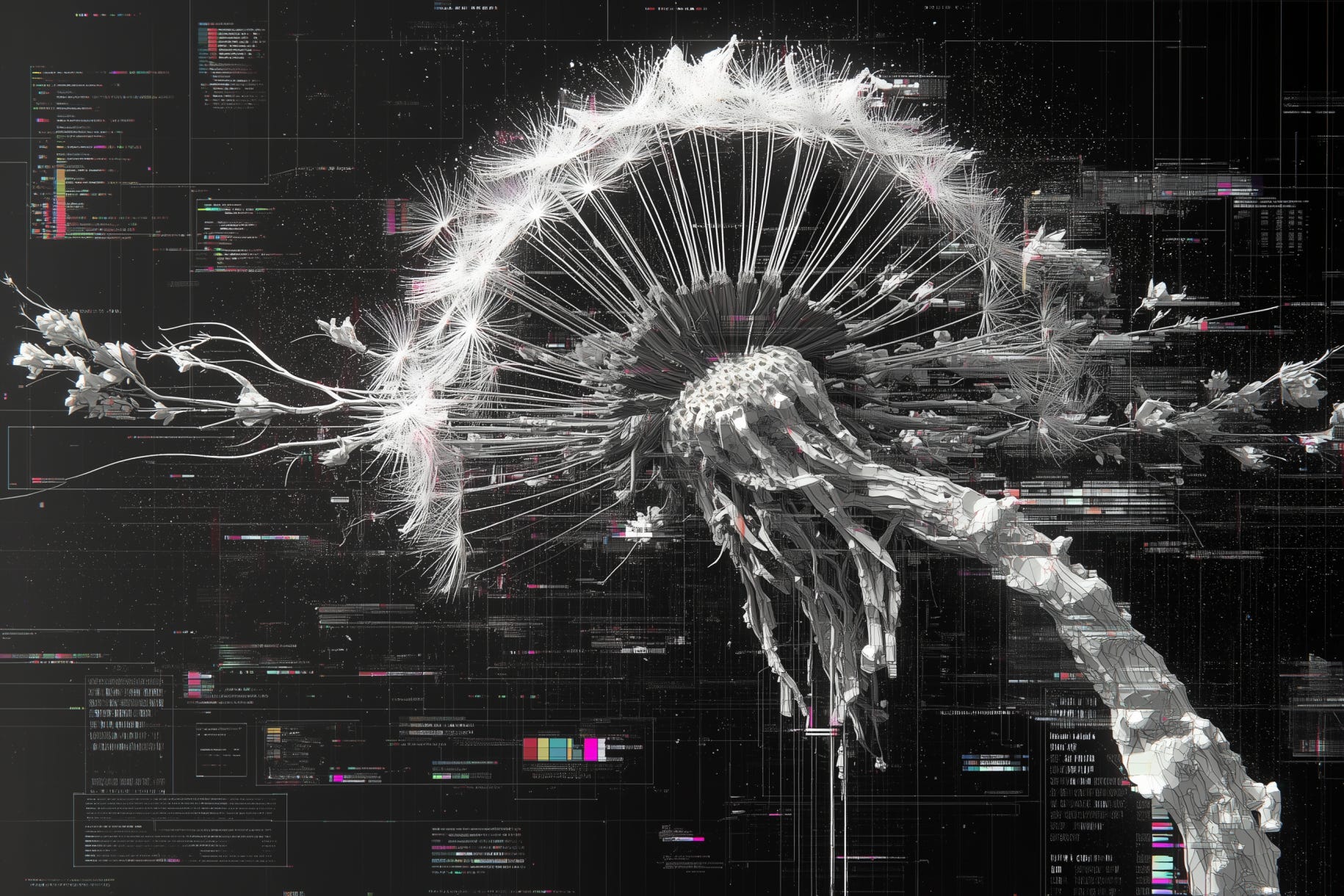
“Grow like a dandelion, not a leviathan.”
This is the closest thing DDX has had to a manifesto.
Centralized growth creates fragility.
Distributed growth creates resilience.
Cyborg analysis
Complex adaptive systems — biological or technological — survive through replication, not mass.
Distributed agency is the cyborg mode.
A future built through many nodes, not one tower.
When placed against the rest of the conference, Gier’s opening reads like the core protocol running underneath all other conversations:
Designers must become stewards of distributed futures, not guardians of centralized ones.
2. Don Norman —
Humanity-Centered Systems and the Infrastructure of Trust
Norman’s presence brought the room into a more reflective headspace.
His message: the field he helped define must evolve again.
