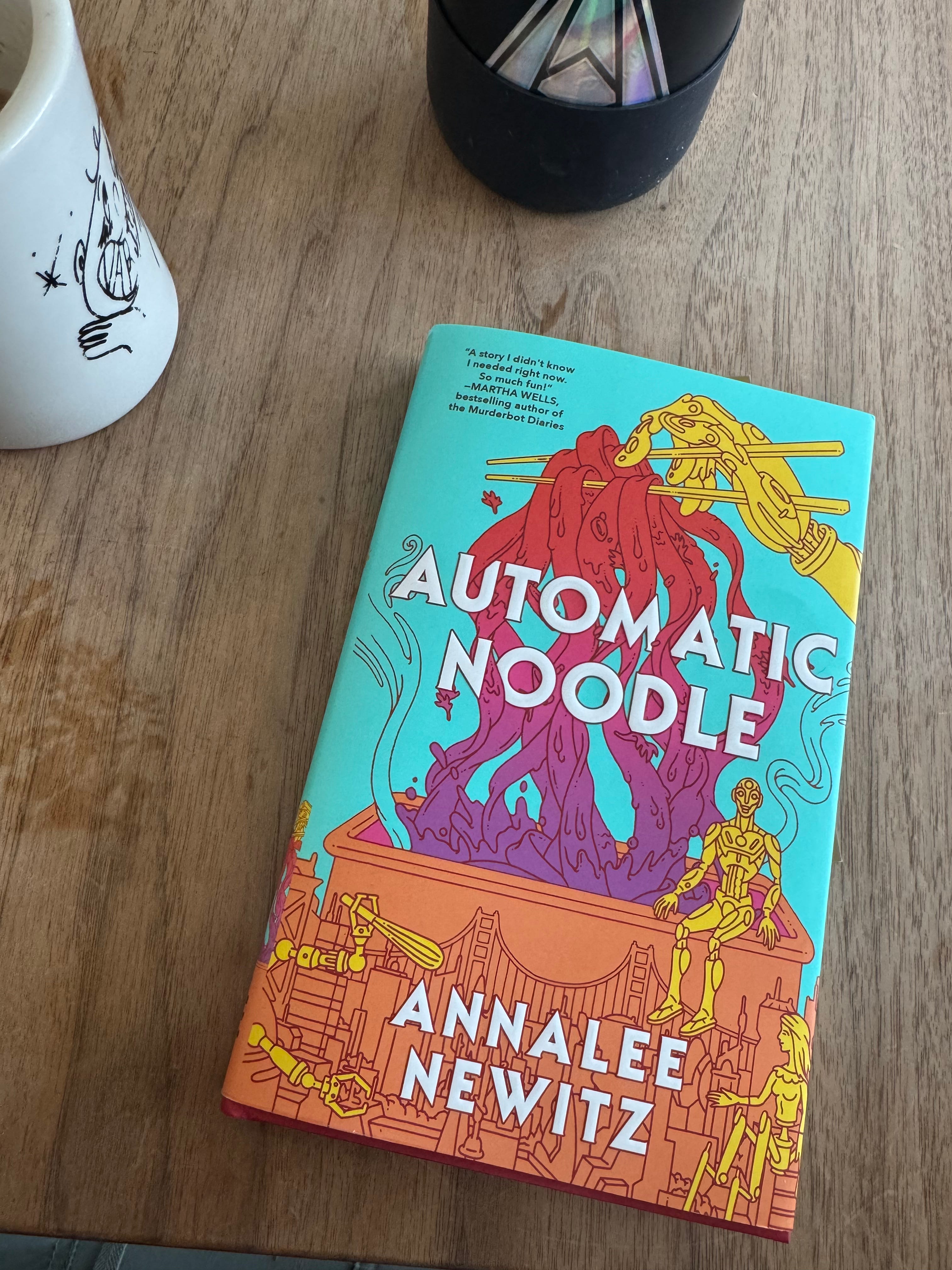
Automatic Noodle was a crushable delight.
The story, written by Annalee Newitz—a journalist and longtime tech and culture editor, including stints as editor-in-chief of io9 and Gizmodo—follows a ragtag group of robots in a futuristic, postwar San Francisco. Recently rebooted and half-disconnected from power and memory, this metal found family slowly comes back online to each other, to the internet, and to the messy recent history that shaped them.
California and America (damn Yankees) have landed in a tenuous cease-fire after a civil war. California grants its robotic workforce a form of pseudo-citizenship, progressive on paper and uneven in practice. Through each IC-powered friend, we see the tiers, loopholes, and quiet humiliations of being almost a citizen.
The tension hums throughout. Humans who welcome robots. Humans who resent them. Regressive, human-first politics that insist personhood must remain exclusive. The story is also full of all-too-relevant modern tropes: unexpected loves, media manipulation, and Yelp review–bombing psy-ops deployed as soft warfare.
The politics feel procedural rather than symbolic. Citizenship here isn’t a metaphor, it’s infrastructure. Rights are granted, revoked, negotiated, and selectively enforced. That framing tracks with Newitz’s background observing how power actually gets written into systems, not as declarations, but as policy.
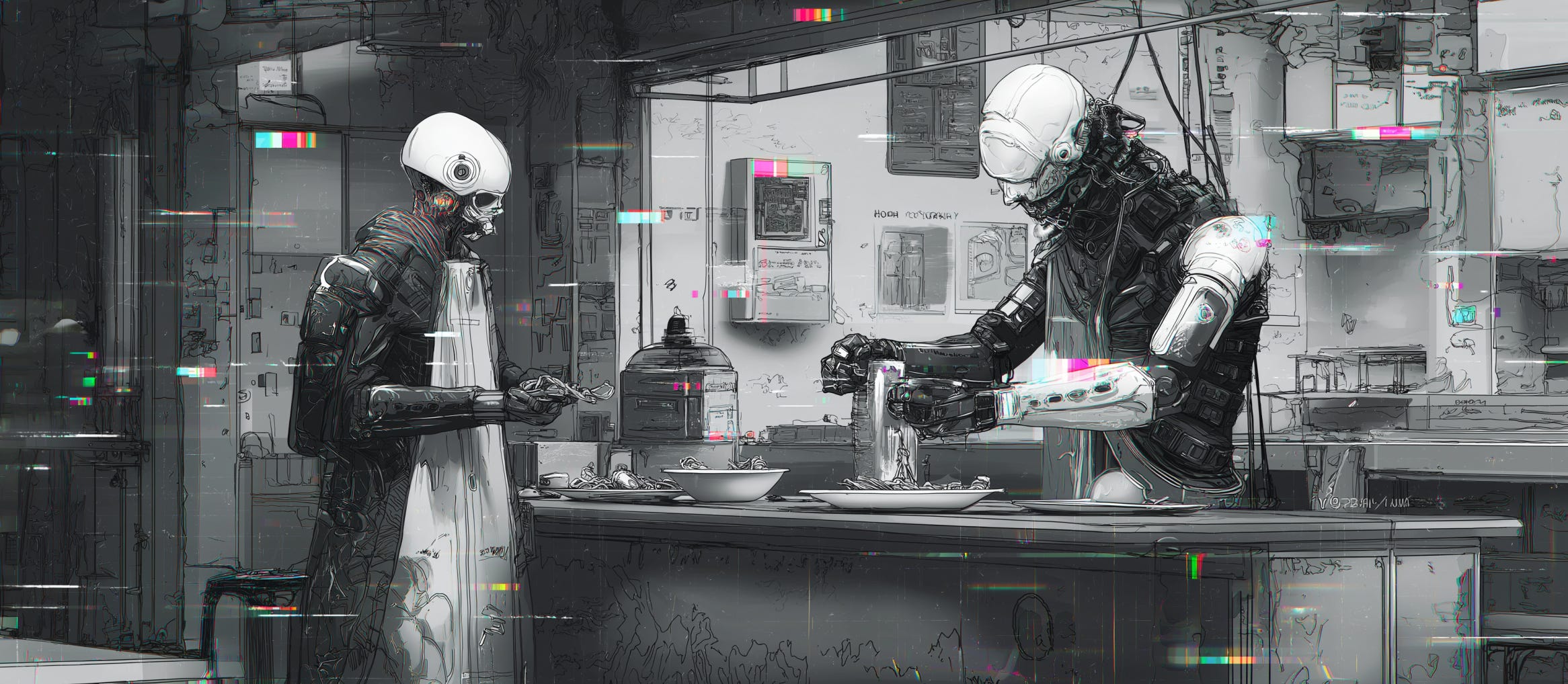
At its heart, though, Automatic Noodle is about memory, belonging, and joy. It is also, unexpectedly, about food. The noodle obsession is mouthwatering, so fair warning: expect to be hungry. The robots’ relationship to taste and eating is delightful and genuinely funny.
One character, a taste-bot resembling an octopus, experiences flavor the way a real octopus does, tasting everything it touches with all eight of its appendages. Cooking becomes a distributed sensory event, equal parts precision and play.
In the aftermath of conflict, these robots find purpose not through revolution but through care. Through craft. Through opening one of the best noodle shops a battered San Francisco has to offer, robot-run or not.