

John Maeda underlined the conference throughline on the final morning: feedback is the key to cybernetics, and cybernetics the key to the AI era. Carl Pei: the real problem isn’t, was never, the technology. It’s form, it’s culture; David Pogue and Phil Schiller spent an hour proving them both right, recalling the last 50 years of Apple legacy.
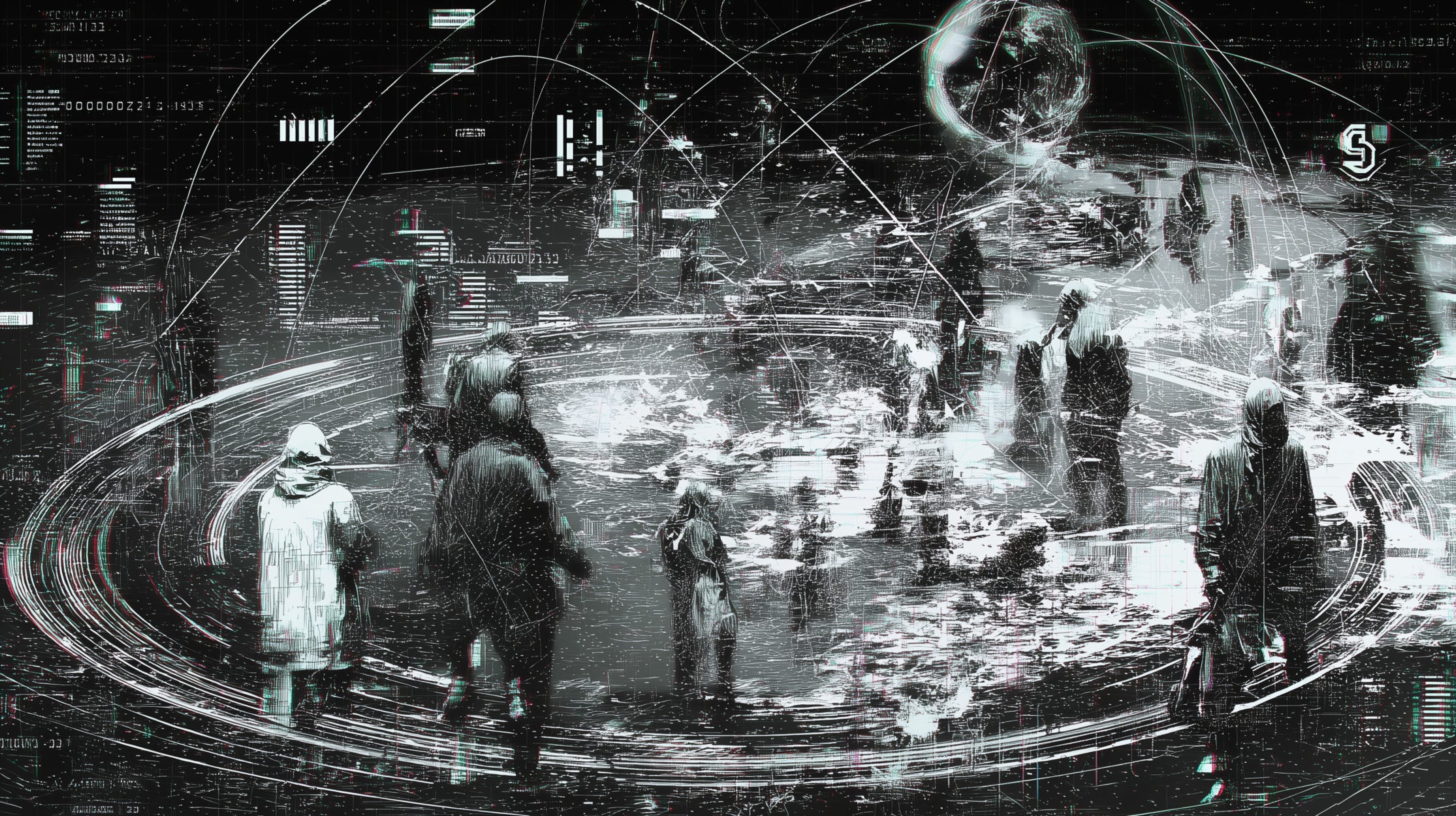
Opening Pulse
Last day.
It’s bittersweet. A mixture of relief and melancholy, a rapid whirlwind of thought leadership, experience, music, technology, culture and convergence. And writing. every. night.
The expo cleared. The sessions thinned. The last souls at SXSW on Wednesday were the ones who came to connect with ideas.
The week was building an argument in fragments: augmentation, convergence, compression, culture, feedback, care. As if by design, day 7 didn’t add anything new. It showed the structure.
Three sessions, back to back, all arriving at the same question from different legacies. Design theory, product strategy, and hardware history asking:
Human in which loop?
// sys.final_day
pieces assembled
feedback loop visible
question persists
Sessions
Design in Tech Report 2026: UX to AX
// session.log
John Maeda // Microsoft
subject = UX to AX / feedback / cybernetics / evaluation loop
Maeda reframed the whole practice in one swift move: from UX to AX. From User Experience to Agent Experience. From designing obstacle courses (in the biz we call them flows) to designing goals.
The distinction is structural: UX designs a journey, AX designs a loop. Agents iterate toward a goal, and the human moves away from execution toward evaluation.
Hence the real design question we have to solve for:
Human in which loop?
Maeda demonstrated his own answer live. He built a system to listen to Amy Webb’s SXSW talk and return it to him as a slide deck. He showed tools built during conference week. Not demos. Working systems. We witnessed the loop in action, built in real time and the proof resonated, punctuated by this:
“Feedback is the key. Feedback is the key to cybernetics, and cybernetics is the key to the AI era.”
This quote got triple carets in my notes. Typographically raising the roof.
Coding advanced as fast as it did because the feedback loop is immediate. You know quickly whether something works. Where feedback is fast and legible, mastery compounds. 10k hours compressed. Maeda’s point was that the same logic now governs design in the AX era.
The texture of content and meta syntax is changing. Markdown over HTML. JSON and YAML as first-class surfaces. Monospaced type returning. Terminal logic, aesthetic and experience absolutely resurging. Cloudflare serving Markdown directly to agents instead of the site’s native HTML. Baseline literacy is shifting.
And it leads to a social paradox:
“LLMs enable average people to feel extraordinary and extraordinary people to feel average.”
Here’s the design brief:
Humans want a story. Agents want metadata.
Key points
UX designs journeys; AX designs loops
The core question of the AX era is human in which loop
Fast feedback remains the underlying accelerator
Cybernetics was named explicitly as the conceptual foundation of the AI era
Judgment is moving upward as execution shifts downward
Humans want story; agents want metadata
// Cyborg note: Maeda named the publication’s frame from the stage. Feedback, control, and communication in systems. The cyborg is the entity that has learned where to sit in the loop.
Featured: A Conversation with Nothing’s CEO — Carl Pei
// session.log
Carl Pei // Nothing
Nicole Kobler // Axios
subject = care / app-layer collapse / agent-to-agent shift / creativity as constraint
Pei’s timing was perfect. He spent the early afternoon arguing that Apple has become boring. An hour later, Phil Schiller explained exactly how a company becomes that.
// The mirror was clean.
Pei’s founding logic for Nothing is still running: products should feel like something. The original strategy: build a phone that makes you feel something, failed. The phone was not going to work. Investors were burning out. So they pivoted to audio. Build uniquely designed earbuds and earn trust on a smaller stage, then came back to the phone.
The product story had one pitch for customers. Another for investors. Customers need something that works now. Investors need something out of the future. As a funded retail company, he’d need to deliver on both promises.
His approach maps directly to many other speakers’ calls this year:
“It’s more of a creativity problem than a technology problem.”
This idea surfaced all week in different rooms and cotnexts. Van Dreunen said it about games. Maeda said it in system terms. Pei made the claim from a hardware perspective.
Nothing’s design DNA runs directly through Teenage Engineering, a cult Swedish hardware studio known for idiosyncratic, design-obsessed synthesizers and gadgets. Jesper’s influence is visible everywhere. The design is the brand. No logo required.
“Design is always the number one reason customers choose Nothing.”
And the echo of analog desire reverberated again, as it had many times this week. Nothing’s monochrome default UI creates friction. Not as punishment, but as care. A behavioral barrier against candy-colored app icons that force reflexive doomscrolling.
A product choice and a worldview. Care built into the default state with friction as the intention.
The software vision is unique, and a model. The app layer is dissolving. The Palm Pilot interaction model is still somehow running in 2026, but Pei sees it ending. Intention should sit closer to action. Context should shorten the route.
Then he landed directly on Maeda’s terrain:
“The shift is not the agent-human interface necessarily but the agent-to-agent interface.”
Same morning. Bam. Same signal.
Pei is now a heavy Claude Code user. He described building a physical version of drag-and-drop in twenty minutes.
To his team, this was both inspiring and threatening.
When asked by the audience about the next form factor to replace phones, his answer was BCI (brain computer interface, if you’ve been paying attention). Not watches, not pendants, not glasses. Those are augmentations. The next OS layer is elsewhere, and likely wired straight into our wetware.
What about privacy? If interaction data remains rich enough, the system will eventually generate replicas. The break may need to happen at the interface and hardware layer, not at the legal checkbox.
The cyborg apparatus needs a trustworthy nervous system.
Key points
The core constraint is creativity, not raw technology
Design remains the differentiator
Friction can be a care mechanism
The app layer is dissolving
Agent-to-agent interaction is becoming the real frontier
BCI is Pei’s strongest replacement thesis
Privacy may need to be solved closer to the body
// Cyborg note: Pei is betting that care by design, built into the default state of the system, still matters. He is probably right.
Featured: David Pogue on Apple’s First 50 Years
// session.log
Phil Schiller // Apple Fellow
David Pogue // Author / CBS Sunday Morning
subject = Apple history / design upstream / care / cultural direction
This came directly after Pei’s interview. I don’t know if that was fate or design, but it felt serendipitous.
Carl Pei had just argued that Apple got boring. Then Phil Schiller came on stage and told the internal stories that explain how every surviving company risks that outcome.
Schiller’s stories were warm, specific, and revealed the culture Steve Jobs attracted. Jobs adding a second door to a conference room so he could enter dramatically. Al Gore being funnier than expected. Small details, but they weave a story of culture that turned design values into behavior.
Schiller provided some context from the years before Jobs returned.
“Good people making bad things.”
The talent was there, it just suffered a directional failure. Good people stayed because they still loved the products. But without the cultural layer that held the signal, even strong teams couldn’t deliver influential product.
For me it resurfaced Beacraft’s argument from yesterday, this time from inside Apple’s history. Jobs and Schiller flipped the model.
Old model: logic board and electrical engineering first, industrial design second.
New model: ID first, EE second. Imagine the thing, then make the tech work for it.
That inversion made the next twenty years of Apple’s unrelenting success possible. Design moved upstream. The rest of the stack had to answer to it.
That same argument surfaced in Maeda’s AX framing and in Pei’s approach to Nothing.
Jony Ive’s line arrived like a thesis statement:
“You can sense care, even if you can’t see care.”
That’s the whole thing wrapped into a feeling.
The unseen rubber band inside the machine. The shift in spatial audio when you move. The monochrome UI that subtly slows the scroll. The body registering what the file compression discards.
Schiller offered a clean example of necessary constraint as a doorway. Apple’s near-death period gave Jobs permission to say no. Kill products. Narrow focus. Rebuild. Constraint became creative permission, and not only did it save the company, it changed the world.
The Motorola ROKR story sharpened another lesson. Apple tried partnership: make a phone with Moto that would play portable music like a Walkman. It failed. The technology was available. The cultural compatibility was not. So Apple took the whole stack.
That choice made the iPhone.
Key points
“Good people making bad things” names the pre-Jobs-return failure correctly
Cultural direction failure is different from talent failure
ID first, engineering second was the decisive structural flip
Care can be sensed before it is seen
Constraint created permission to simplify
Culture and coordination were not separable
The whole-stack move came after failed collaboration
// Cyborg note: What Jony Ive called care, Signal+Static has been calling responsible infrastructure. Invisible, consequential, bodily registered, and easy to mistake for ornament if you do not know where to look.
Day Theme
The week assembled its answer on the last day.
Maeda: feedback is the key to cybernetics, and cybernetics is the key to the AI era. In this climate, we hear Human-in-the-loop constantly. The design question is to ask human in which loop. Humans want story. Agents want metadata.
Pei: the real problem is not the technology. It is creativity, care, and where the system places intention. The app layer is dissolving and the loop is transforming.
Schiller: good people making bad things. Design first. Engineering second. You can sense care even if you can’t see care. Culture and coordination are not separable.
The week started with augmentation and anxiety. It moved through convergence, ghosts, XR, org constitutions, living intelligence, and the texture of content in the agent era. Every thread arrived at the same underlying question:
What is the human’s role in the loop, and what gets designed to support it?
Intent and judgment over execution.
Culture over pure coordination.
Care at the layer nobody sees.
Imagination as infrastructure.
And of course, feedback as the mechanism that makes all of it work.
And the body, still, as the thing the format cannot hold and the system cannot replace. A good cyborg understands their relationship to technology in order to live fully in their human skin, and fully understand and define their relationship to the culture around them.
// sys.daylog · day_07 · 2026-03-18
UX_to_AX = confirmed
cybernetics_named = explicit
fundamental_question = human_in_which_loop
humans_want = story
agents_want = metadata
app_layer = dissolving
agent_to_agent = emerging
creativity_problem = recurring
design_upstream = confirmed
care_invisible = confirmed
NDE_unlock = logged
good_people_bad_things = culture failure
signal+static_frame = named from stage
week_argument = assembled
transmission = complete
Closing
Seven days. One argument, assembled in public but perhaps only visible to those who are patient and listening to the whispers in the system.
The machine is getting better at execution. The human role is moving toward intent, judgment, and care. Feedback is the mechanism connecting them. Culture gives the loop direction. Imagination builds the future before the engineers arrive. The body keeps what the format drops.
Beacraft’s version was the most economical: offload the execution, not the thinking.
Maeda’s version was the cleanest: humans want a story. Agents want metadata. Design the handoff.
Pei’s version was the most practical: care, built into the default state of the system, still differentiates.
Ive’s version, via Schiller, was the oldest and maybe still the best: you can sense care, even if you can’t see care.
Signal+Static has been reporting from inside this loop all week. The loop may be closed, but our minds are open to possibility and ready to track the storm.
If feedback is the key to cybernetics, and cybernetics is the key to the AI era, then the real design question is what you are choosing to place at the center of the loop. And whether it’s worthy of being fed back into, again and again.
Thank you for your concise correct connected reportage.